
Roof Vents & Attic Ventilation Los Angeles
Your attic needs to breathe. Without proper ventilation, heat and moisture destroy your roof from the inside out. That is not marketing. That is physics.
What Are Roof Vents and Why Does Every Los Angeles Home Need Them?
Roof vents are openings in your roof system that allow hot air and moisture to escape from your attic. Without proper ventilation, your attic traps heat and humidity that destroy your roof from the inside out. In Los Angeles, where summer attic temperatures regularly exceed 160°F, proper roof ventilation is not optional—it is a requirement for your roof warranty, your building code compliance, and your energy bills.
Every major roofing manufacturer—GAF, Owens Corning, CertainTeed, Malarkey—requires adequate attic ventilation as a condition of their warranty. If your roof does not have sufficient ventilation, your manufacturer warranty may be void from day one.
If hot air cannot escape the attic, insulation alone will not solve the problem.
Ventilation removes heat. Insulation slows heat transfer.
You need both.
Reduces Attic Heat by 40–50°F
Proper ventilation drops summer attic temperatures dramatically, taking massive pressure off your AC system and protecting your roofing materials from heat damage.
Eliminates Trapped Moisture
Trapped moisture causes mold, mildew, wood rot, and rusted fasteners. Ventilation removes humidity before it condenses on cold surfaces inside your attic.
Protects Your Roof Warranty
GAF, Owens Corning, CertainTeed, and Malarkey all require balanced ventilation for warranty coverage. No ventilation means no warranty.
Lowers Energy Bills 10–30%
Los Angeles homeowners with proper attic ventilation spend significantly less on summer cooling. That can mean $200–$600+ in annual savings.
Extends Roof Life by Years
Heat and moisture are the two biggest killers of roofing materials. Ventilation attacks both problems simultaneously, adding years to your roof life.
Required by Building Code
Los Angeles building code requires attic ventilation meeting the 1:150 ratio. Every new roof and major remodel must comply.
At SoCal Wholesale Roofing, we have been installing, repairing, and upgrading roof ventilation systems throughout Los Angeles since our first roofing job in 1991. We are a licensed roofing contractor with 35 years of experience in attic ventilation for every roof type in Southern California—asphalt shingle, clay tile, concrete tile, metal, slate, and flat roofs.
How Does Roof Ventilation Actually Work?
Balanced attic ventilation uses physics to continuously cycle air through your attic. The system works through two natural forces: thermal buoyancy (hot air rises) and the Bernoulli effect (wind creates negative pressure over ridge vents).
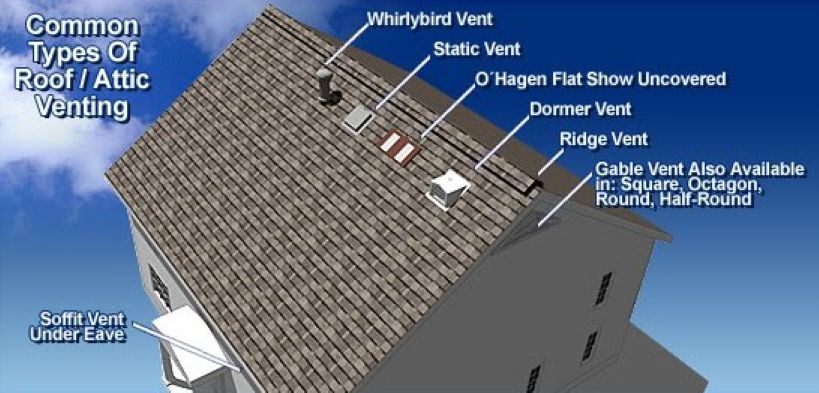
Common types of roof and attic venting systems installed in Los Angeles
Cool Air Enters at the Eaves
Outside air enters your attic through soffit vents, drip edge vents, or fascia vents at the lowest point of your roof system. This intake air is cooler than the air already trapped in your attic.
Air Rises as It Absorbs Heat
As cool air enters the attic, it absorbs heat radiated from the roof deck (heated by direct sunlight) and from the attic floor (heated by your living space). The warmed air naturally rises toward the highest point of the attic space.
Hot Air Exits Through Exhaust Vents
The rising hot air exits through exhaust vents at or near the ridge—ridge vents, box vents, turbine vents, or O'Hagin vents. This creates a slight vacuum effect that pulls more cool air in through the intake vents below.
Continuous Airflow Cycle
The cycle repeats continuously as long as there is a temperature differential between outside air and attic air. Wind across the ridge accelerates the process through the Bernoulli effect, creating negative pressure that actively draws air upward and out.
Moisture Removal
As air cycles through the attic, it carries moisture vapor out with it. This prevents condensation on the underside of the roof deck, on metal fasteners, and on insulation—all of which cause serious structural damage over time.
Balanced ventilation is required by every building code in Los Angeles County and a requirement of every roofing manufacturer warranty we install. Learn more about how ventilation works with attic insulation and attic fans.
What Types of Exhaust Roof Vents Are Available for Los Angeles Homes?
Exhaust vents are installed at or near the ridge of your roof to let hot air out. Here is every type of exhaust roof vent we install in Los Angeles, with honest guidance on which is best for your situation:
What Are Ridge Vents and Are They the Best Option?
Ridge vents are the most effective and most popular exhaust vent for Los Angeles roofs. They run along the entire peak of your roof, providing continuous, even ventilation across the full ridge length. Ridge vents are covered by ridge cap shingles and are nearly invisible from the ground.
We recommend ridge vents for any roof with a defined ridge line. They work with asphalt shingles, composite shingles, and many metal roof systems. Ridge vents provide the highest net free area per linear foot of any passive exhaust vent, and they distribute exhaust evenly instead of creating hot spots.
- Continuous ventilation along the entire ridge—no hot spots
- Nearly invisible from the ground—clean aesthetic
- No moving parts—zero maintenance
- Highest NFA per linear foot of any passive exhaust vent
- Works with the Bernoulli effect—wind accelerates airflow
Best for: Gable roofs, standard pitch roofs, asphalt shingle roofs, most Los Angeles residential homes
What Are Box Vents (Dormer Vents / Static Vents)?
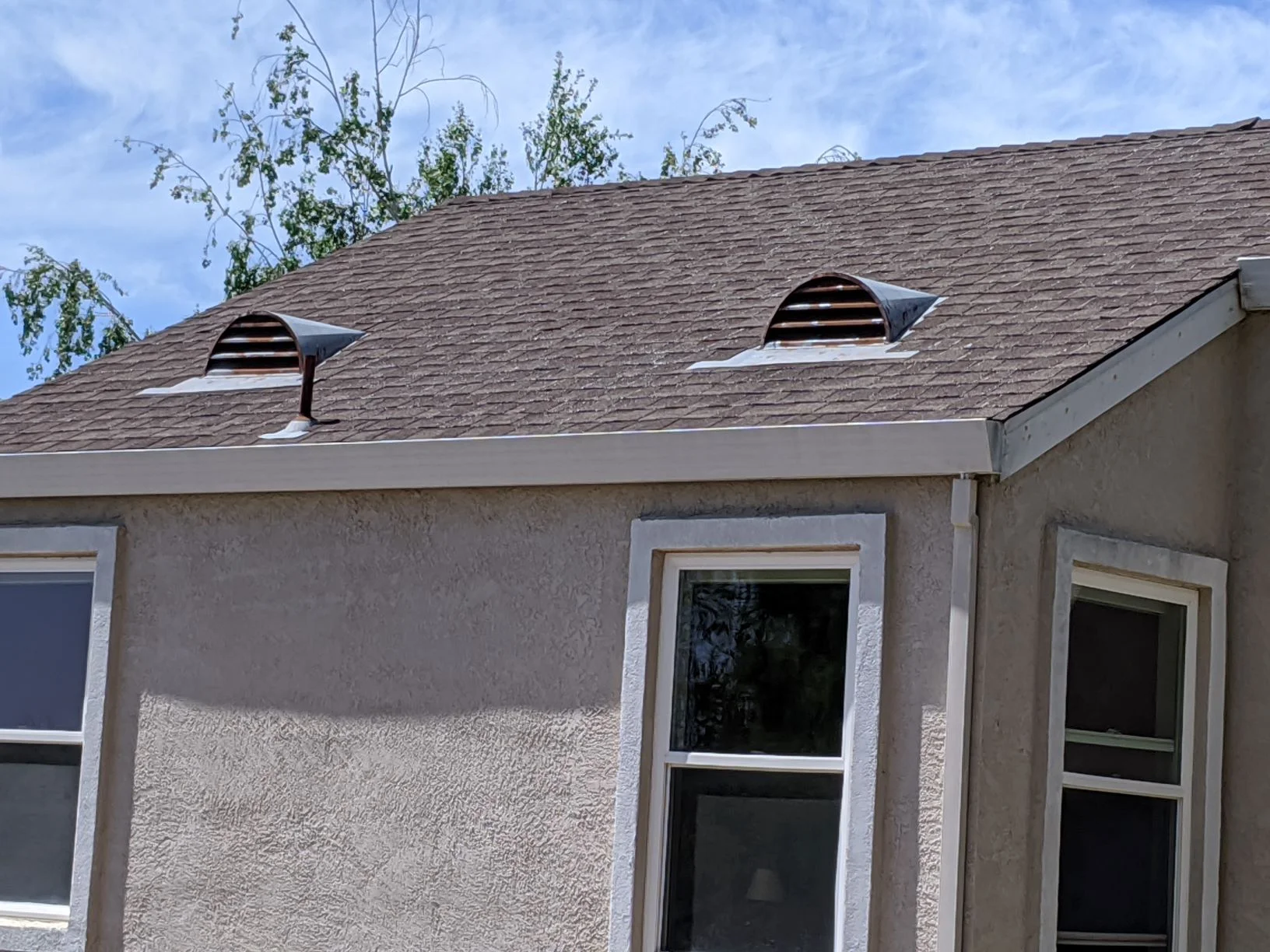
Box vents—also called dormer vents, static vents, or turtle vents—are individual square or round vents installed in cutouts on the roof deck near the ridge. They rely on natural convection: hot air rises and exits through the vent opening. Box vents are effective, affordable, and easy to install on existing roofs.
Multiple units are typically needed—usually 4 to 8 for a standard Los Angeles home. We commonly install box vents on hip roofs and complex rooflines where a continuous ridge vent is not practical. They are one of the most common and reliable exhaust vents we install throughout the San Fernando Valley, Glendale, and Burbank.
- No moving parts—nothing to break or maintain
- Uses natural convection to exhaust hot air
- Low profile—blends with the roofline
- Cost-effective for most homes and budgets
- Easy to retrofit on existing roofs
Best for: Hip roofs, complex rooflines, retrofit installations, budget-conscious upgrades
What Are Turbine Vents (Whirlybird Vents)?
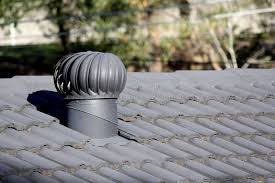
Turbine vents use wind power to spin internal vanes that actively pull hot air from the attic. They move significantly more air than static box vents when wind is present, making them especially effective in coastal and breezy areas of Los Angeles like Santa Monica, Long Beach, and the South Bay.
Turbine vents require periodic bearing lubrication (every 3–5 years) and can become noisy when bearings wear. We install high-quality galvanized or aluminum turbine vents that resist corrosion in the LA climate and operate quietly for years.
- Wind-powered—no electricity required
- Moves more air than static vents when wind is present
- Effective in coastal and breezy areas of LA
- Relatively low cost with good performance
- Available for shingle, tile, and metal roofs
Best for: Windy coastal areas, homes needing extra exhaust capacity, tile and shingle roofs
What Are O'Hagin Vents and Why Are They Essential for Tile Roofs?
O'Hagin vents are the industry-standard ventilation product for clay tile, concrete tile, and flat-profile roofing systems—the most common roof types in Los Angeles, Pasadena, Beverly Hills, and the Westside. They are designed to sit flush with the tile profile, providing high airflow with minimal visual impact.
O'Hagin vents are color-matched to blend seamlessly with your existing roof tiles. They come in configurations for both intake and exhaust, and they are available with optional fire-rated screens—critical for homes in wildfire-prone areas of Los Angeles. We install O'Hagin vents on tile roofs across the San Fernando Valley, Pasadena, Glendale, Burbank, Beverly Hills, Brentwood, and Pacific Palisades.
- Low-profile design sits flush with tile roofline
- Color-matched to blend with existing clay or concrete tile
- High airflow—up to 68 sq in NFA per vent
- Available with fire-rated ember screens (Chapter 7A compliant)
- Works with clay, concrete, flat tile, and Spanish-style roofs
- The preferred vent for Mediterranean and Spanish Colonial architecture
Best for: Clay and concrete tile roofs, Spanish/Mediterranean homes, fire-zone properties, homeowners wanting invisible ventilation
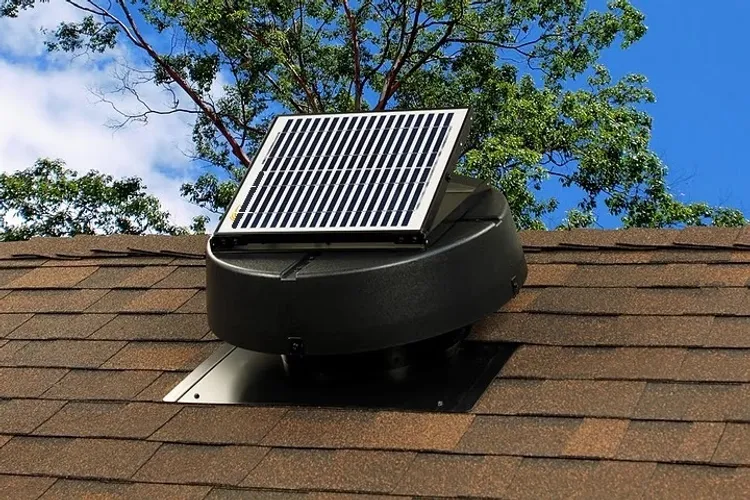
What Are Solar Powered Roof Vents?
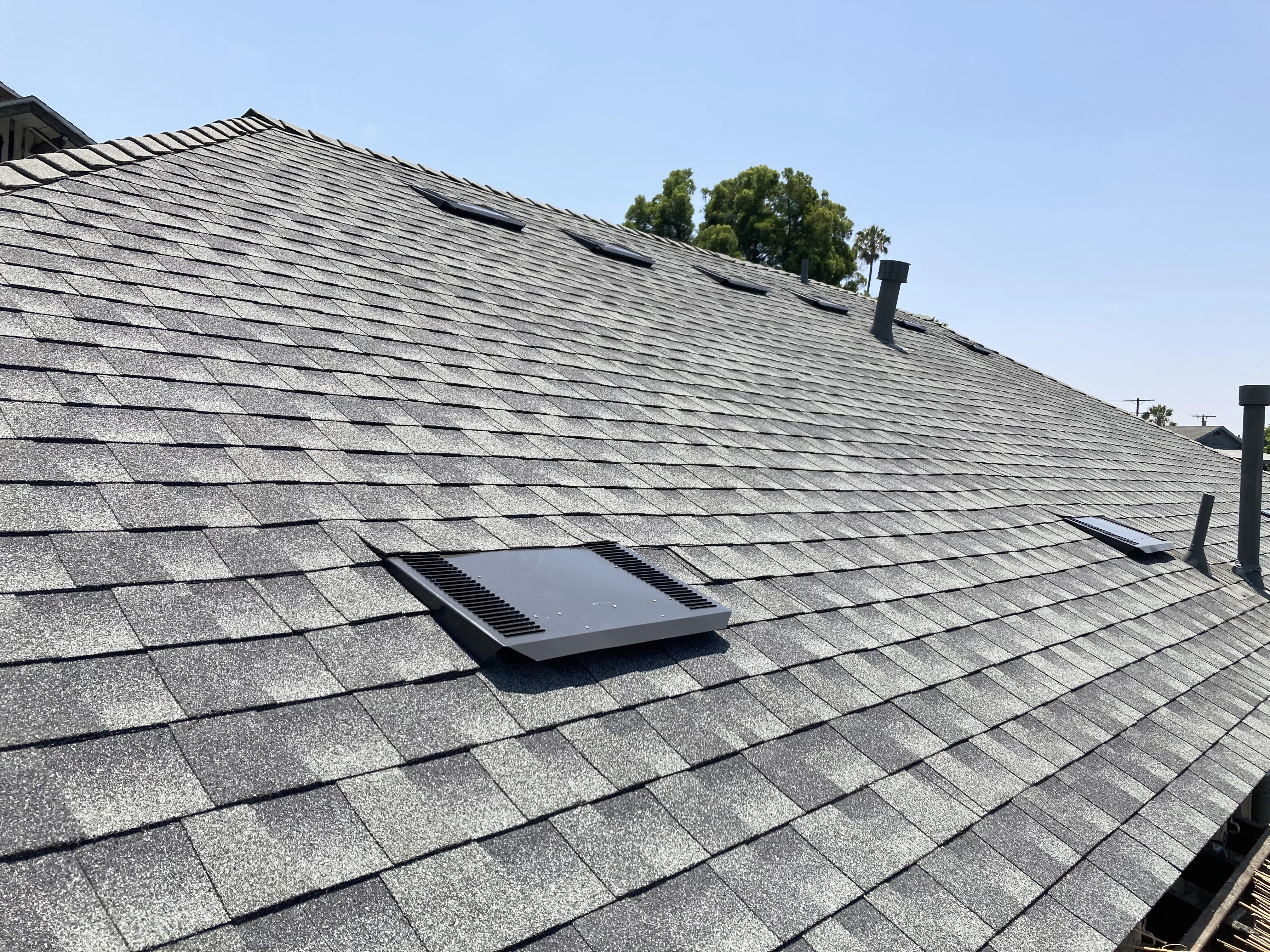
Solar powered roof vents provide active, motorized ventilation without adding to your electric bill. A built-in solar panel powers a fan that actively moves large volumes of hot air out of your attic—and it works hardest when the sun is strongest, which is exactly when you need it most.
Solar vents require no electrical wiring, making installation straightforward. They are ideal for Los Angeles homes with persistent heat buildup issues, limited roof space for additional passive vents, or homeowners who want maximum cooling without ongoing energy costs. Learn more on our attic fans page.
- Powered by built-in solar panel—zero operating cost
- Actively moves large volumes of hot air
- Works hardest when the sun is strongest
- No wiring required—easy installation
- Ideal for the 284+ sunny days per year in Los Angeles
Best for: Homes with heat buildup, energy-conscious homeowners, maximum attic ventilation performance
What Types of Intake Vents Do Los Angeles Homes Need?
Exhaust vents cannot work without intake vents. Intake vents are installed at the eaves or lower roof edge to allow cool outside air to enter the attic. Without adequate intake, exhaust vents create negative pressure that pulls conditioned air from your living space through ceiling gaps, light fixtures, and ductwork connections. Here are the intake vent types we install:
Soffit Vents (Under-Eave Vents)
The most common and effective intake vent. Installed in the soffit—the underside of your roof overhang. Available in continuous strip, rectangular, and round perforated styles. Essential for any balanced ventilation system. The number one intake vent we install in Los Angeles.
Drip Edge Vents
Installed at the very edge of the roof where the drip edge meets the fascia. Used when the home has no soffit overhang or when soffit space is too narrow. Common in mid-century modern and contemporary architecture throughout Los Angeles, Beverly Hills, and the Westside.
Gable Vents
Decorative vents installed in the triangular gable end wall. Can function as both intake and exhaust depending on wind direction. Less effective than soffit-to-ridge systems but useful as supplemental ventilation. Very common on older homes in Pasadena, Glendale, and Burbank.
Fascia Vents
Installed directly into the fascia board at the roof edge. Similar function to drip edge vents. Used on homes with enclosed soffits or no overhang. Provides intake ventilation where soffit vents are not physically possible.
Not sure which vents are right for your home? Request a free ventilation assessment. We inspect your attic, measure your space, calculate your NFA requirements, and recommend the best system for your roof type, budget, and Los Angeles climate zone.
What Are the Warning Signs Your Roof Ventilation Is Failing?
Your attic is trying to tell you it cannot breathe. Here are the warning signs every Los Angeles homeowner should watch for:
Extreme Attic Heat (Over 140°F)
A well-ventilated attic should be within 10–15°F of outside temperature. If your attic feels like an oven in summer, your ventilation is inadequate.
Shingles Curling, Buckling, or Aging Prematurely
Heat trapped in the attic bakes shingles from below, causing premature aging and granule loss. If your 10-year-old roof looks 20, ventilation is likely the culprit.
Mold, Mildew, or Musty Smell in the Attic
Dark spots on wood, visible mold on the underside of the roof deck. Moisture cannot escape without ventilation, and mold thrives in warm, humid, stagnant air.
Rusted Nails, Metal Straps, or Hardware
Condensation from trapped moisture corrodes metal fasteners, hurricane straps, and joist hangers—a structural safety concern that often goes unnoticed until an inspection.
Sky-High Summer Energy Bills
If your cooling costs spike every summer despite a functioning AC system, your attic may be acting as a heat source instead of an insulated buffer zone.
Peeling or Blistering Exterior Paint
Moisture migrating from the attic through exterior walls causes paint to blister and peel. Especially common on older homes in Pasadena, Glendale, and Burbank.
Warped or Sagging Roof Deck
Plywood and OSB roof decking absorbs moisture and warps over time. A visible sag in your roofline from outside often indicates severe ventilation failure.
Roof Vent Leak During Rain
If water enters through your existing vents during rain, the vents are damaged, improperly installed, or missing weather baffles. This is a common issue we repair throughout Los Angeles.
If you notice any of these signs, request a free attic ventilation inspection. Most ventilation upgrades pay for themselves in energy savings within 2–3 years.
How Much Does Roof Vent Installation Cost in Los Angeles?
Roof vent installation costs vary by vent type, quantity, and roof accessibility. Here are typical costs for professional roof vent installation in Los Angeles from a licensed roofing contractor:
| Vent Type | Typical Cost (Installed) | Notes |
|---|---|---|
| Box / Dormer Vent (each) | $150–$350 | Most affordable. 4–8 typically needed per home. |
| Ridge Vent (full ridge) | $400–$1,200 | Depends on ridge length. Best value per dollar. |
| Turbine / Whirlybird Vent (each) | $200–$450 | Wind-powered. Great for coastal LA areas. |
| O'Hagin Tile Vent (each) | $200–$450 | For clay and concrete tile roofs. Color-matched. |
| Soffit Vents (full eave) | $300–$900 | Continuous strip or individual. Essential for intake. |
| Drip Edge Vents | $350–$800 | For homes with no soffit overhang. |
| Gable Vent (each) | $150–$400 | Supplemental. Common on older LA homes. |
| Solar Attic Fan / Vent | $400–$900 | No wiring needed. See our attic fans page. |
| Full Ventilation System Upgrade | $800–$2,500 | Complete intake + exhaust. Best long-term value. |
These prices include materials, labor, flashing, sealant, and cleanup. As a wholesale roofing company, our pricing is 20–40% below retail roofing contractors because we buy materials directly from manufacturers at wholesale cost and pass the savings to you.
Need financing? We offer flexible financing options for all ventilation upgrades.
Does Attic Ventilation Affect Your Roof Warranty?
Yes. Inadequate attic ventilation is one of the most common reasons roofing manufacturers deny warranty claims. Here is what the major manufacturers require:
- GAF requires balanced ventilation per local building code as a condition of all warranty levels including the Golden Pledge warranty. Ventilation deficiency can void coverage entirely.
- Owens Corning requires a minimum of 1 sq ft NFA per 150 sq ft of attic space with balanced intake and exhaust. Their Platinum Protection warranty explicitly requires adequate ventilation.
- CertainTeed requires balanced ventilation and specifically prohibits mixing powered and passive exhaust vents on the same roof.
- Malarkey requires adequate ventilation for all warranty coverage. Their Enhanced Warranty provides 30-year coverage but only with documented proper ventilation at installation.
Read our full warranty guides: GAF · Owens Corning · CertainTeed · Malarkey · All Warranties
What Are the Most Common Roof Ventilation Mistakes Roofers Make in Los Angeles?
Not all roofers understand ventilation. Here are the mistakes we correct most often on Los Angeles roofs:
- Mixing powered fans with passive ridge vents — powered fans short-circuit the passive system by pulling air in through ridge vents instead of through soffit vents, eliminating the balanced airflow your attic needs
- Installing exhaust vents with no intake — exhaust without intake creates negative pressure that pulls conditioned air from your living space through ceiling fixtures, recessed lights, and ductwork connections
- Blocking soffit vents with insulation — blown-in insulation frequently blocks soffit vents from the inside, eliminating all intake airflow while looking fine from outside
- Installing too few vents — cutting costs by installing fewer vents than NFA calculations require leaves your attic under-ventilated and your warranty at risk
- Cutting through rafters or trusses — inexperienced roofers sometimes cut structural members to fit vents, compromising your roof structure and violating building code
- Using wrong flashing — generic flashing that does not match the vent profile or roof material will leak within the first rain season
- Not accounting for O'Hagin vent requirements on tile roofs — using box vents or other profile vents on tile roofs looks terrible and creates waterproofing issues
We have been fixing other roofers' ventilation mistakes for 35 years. Learn how to choose the right roofing company in Los Angeles.
What Is the Roof Vent Installation Process?
Every roof vent installation from SoCal Wholesale Roofing follows a thorough, code-compliant process:
Free Attic Inspection & NFA Calculation
We inspect your attic, measure square footage, evaluate existing ventilation, assess insulation condition, and calculate your Net Free Area requirements per building code. We also check for mold, moisture, and structural issues.
Custom Ventilation Design
Based on your attic size, roof type, existing ventilation, and budget, we design a balanced system with the correct ratio of intake to exhaust. We present options with honest pricing—no upselling.
Roof Preparation & Safety
We set up fall protection, protect landscaping, and mark vent locations to ensure proper spacing while avoiding rafters, wiring, and plumbing.
Precision Vent Installation
We cut precise openings, install vents with manufacturer-specified flashing, apply waterproof sealant, and secure all components. For ridge vents, we cut a continuous slot along the ridge and install under ridge cap shingles.
Waterproofing & Flashing
Every penetration gets multiple layers of protection: ice and water shield underlayment, step or counter flashing, roofing sealant, and proper shingle or tile integration.
Final Inspection, Testing & Cleanup
We verify airflow, check all flashing and seals, photograph our work, and clean up every nail and scrap. We leave your property cleaner than we found it.
Most installations are completed in a single day. All work is backed by our 10-year workmanship warranty.
What Other Attic Services Does SoCal Wholesale Roofing Provide?
Roof vents are just one part of a complete attic system. We also provide:
Attic Insulation
Fiberglass batts, blown-in, spray foam, radiant barrier. Title 24 compliant. R-value analysis and upgrade.
Learn more →Attic Fans
Electric and solar-powered attic fans. Paired with proper intake ventilation for maximum cooling.
Learn more →Roof Replacement
The perfect time to upgrade ventilation—the attic is already accessible and open.
Learn more →Roof Repair
Fix vent leaks, damaged flashing, and ventilation issues during roof repairs.
Learn more →Escrow Roof Inspections
Comprehensive ventilation assessment included in every escrow inspection.
Learn more →Roofing Materials
Every material has ventilation requirements. We match vents to your roofing system.
Learn more →Where Do We Install Roof Vents in Los Angeles?
We install, repair, and replace roof vents throughout Los Angeles County and surrounding areas. Our licensed roofing contractors serve:
Your Attic Needs to Breathe. We Make It Happen.
Professional roof vent installation and attic ventilation upgrades throughout Los Angeles.
Wholesale pricing. 10-year workmanship warranty. The best roofers in LA. First roofing job in 1991.
Get a Free Ventilation AssessmentFrequently Asked Questions
The standard formula is 1 square foot of net free ventilation area (NFA) for every 150 square feet of attic floor space. Half should be intake vents (soffit or drip edge) and half exhaust vents (ridge, box, or turbine). A typical 1,500 sq ft Los Angeles home needs about 10 square feet of total ventilation. We calculate your exact requirements during a free attic inspection.