Fiberglass Attic Insulation for Los Angeles Homes
The most widely used attic insulation material in America. Available as batts, rolls, or blown-in. Non-combustible. Affordable. Backed by Owens Corning limited lifetime warranty.
Fiberglass insulation has been the backbone of American home insulation since Owens Corning invented it in 1938. Nearly 90% of US homes with insulation contain fiberglass. There is a reason for that: it works, it is affordable, it is fire-resistant, and when properly installed, it lasts a lifetime.
At SoCal Wholesale Roofing, we have installed fiberglass insulation in thousands of Los Angeles attics since our first roofing job in 1991. We install both fiberglass batts and blown-in fiberglass, and we use Owens Corning products exclusively for their quality, warranty, and performance consistency.
This guide covers everything you need to know about fiberglass attic insulation: types, R-values, costs, pros, cons, and how it compares to other insulation materials for Los Angeles homes.
What Are the Different Types of Fiberglass Attic Insulation?
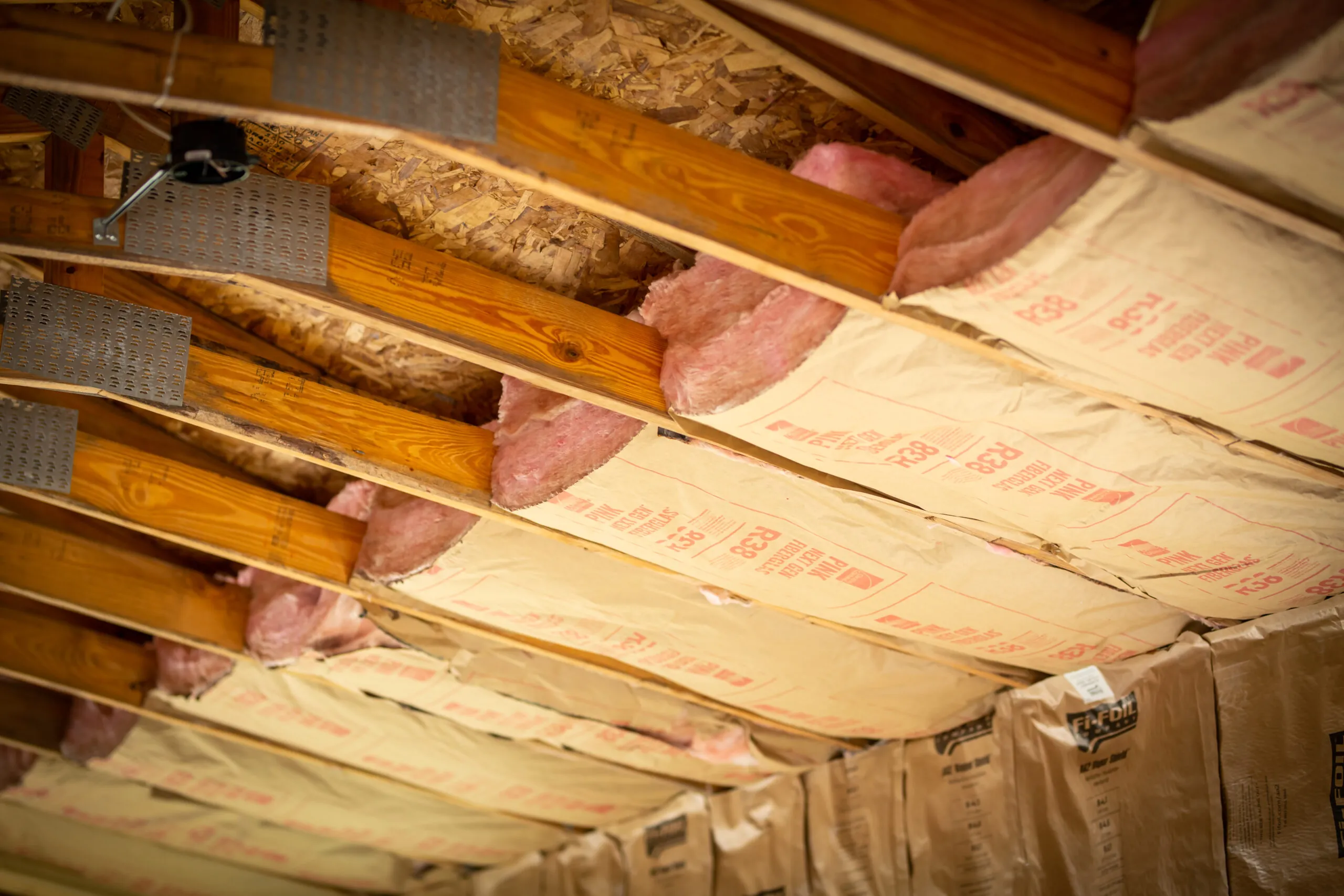
Fiberglass insulation comes in three main forms for attic applications. Each has specific advantages depending on your attic layout and goals:
Fiberglass Batts
Pre-cut rectangular panels designed to fit between standard joist spacing (16" or 24" on center). Available in multiple thicknesses for different R-values. Can be faced (with kraft paper or foil vapor retarder) or unfaced.
Advantages:
- Easy to handle and install in accessible attics
- Consistent R-value when not compressed
- Available in specific R-value ratings
- Can be layered for higher R-values
Limitations:
- Requires cutting around obstacles (pipes, wires, ducts)
- Gaps at edges reduce performance
- Can be compressed during storage or foot traffic
- Less effective in attics with irregular joist spacing
Best for: New construction and open attics with standard joist spacing
Fiberglass Rolls
Continuous rolls of fiberglass insulation that are unrolled between joists. Similar to batts but longer, reducing the number of seams. Available in the same R-values and facing options as batts.
Advantages:
- Fewer seams than batts for better coverage
- Faster installation in long, straight runs
- Same R-value options as batts
- Good for attics with consistent joist spacing
Limitations:
- Same cutting issues as batts around obstacles
- Heavy rolls can be difficult in tight attic spaces
- Seams at roll ends still create potential gaps
- Not ideal for attics with many obstacles
Best for: Long, open attic spaces with few obstacles
Blown-In Fiberglass
Loose fiberglass fibers blown into the attic using professional equipment. Fills gaps, covers obstacles, and creates uniform coverage. Can be installed to any desired depth for custom R-values.
Advantages:
- Fills gaps and irregular spaces completely
- Covers around pipes, ducts, and wiring
- Eliminates thermal bridging at joist tops
- Custom R-value by controlling depth
- Ideal for adding to existing insulation
Limitations:
- Requires professional blowing equipment
- Can settle 5–10% over time (installed extra to compensate)
- Slightly lower R-value per inch than batts
- Can shift or blow around in very drafty attics
Best for: Most Los Angeles attics — our top recommendation for upgrades
Fiberglass Insulation R-Value Chart
Here is a complete R-value reference chart for fiberglass insulation products:
| Product | R-Value | Thickness | Width | Coverage |
|---|---|---|---|---|
| Batt – Standard | R-11 | 3.5" | 15" or 23" | Walls, interior cavities |
| Batt – Standard | R-13 | 3.5" (high density) | 15" or 23" | 2x4 wall cavities |
| Batt – Standard | R-19 | 6.25" | 15" or 23" | 2x6 walls, attic floors |
| Batt – Standard | R-25 | 8" | 15" or 23" | Attic floors, cathedral ceilings |
| Batt – Standard | R-30 | 9.5" | 15" or 23" | Attic floors (Zone 6 minimum) |
| Batt – Standard | R-38 | 12" | 15" or 23" | Attic floors (Zone 8/9 minimum) |
| Blown-In (Owens Corning) | R-30 | 13.25" | Full coverage | Attic floors |
| Blown-In (Owens Corning) | R-38 | 17.00" | Full coverage | Attic floors |
| Blown-In (Owens Corning) | R-49 | 21.75" | Full coverage | Attic floors (DOE recommended) |
| Blown-In (Owens Corning) | R-60 | 26.75" | Full coverage | Maximum performance |
How Much Does Fiberglass Attic Insulation Cost in Los Angeles?
Fiberglass is the most affordable insulation option for Los Angeles attics. Here is what to expect for installed pricing:
| Project Type | Cost per Sq Ft | 1,000 Sq Ft Attic | 1,500 Sq Ft Attic | 2,000 Sq Ft Attic |
|---|---|---|---|---|
| Fiberglass Batts to R-38 | $1.50–$3.50 | $1,500–$3,500 | $2,250–$5,250 | $3,000–$7,000 |
| Blown-In Fiberglass to R-38 | $1.50–$4.00 | $1,500–$4,000 | $2,250–$6,000 | $3,000–$8,000 |
| Top-Off (R-19 to R-38) | $1.00–$2.50 | $1,000–$2,500 | $1,500–$3,750 | $2,000–$5,000 |
| Complete Remove & Replace | $3.00–$6.00 | $3,000–$6,000 | $4,500–$9,000 | $6,000–$12,000 |
*Prices include material, labor, and cleanup. Complete remove & replace includes insulation removal, sanitization, sealing, and new insulation. Call (818) 937-4500 for a free estimate.
What Warranty Comes with Fiberglass Attic Insulation?
We install Owens Corning fiberglass insulation products which include a limited lifetime warranty on material performance. Here is what is covered:
Owens Corning Limited Lifetime Warranty
- Covers fiberglass batts, rolls, and blown-in products
- Warrants R-value performance for the life of the product
- Covers manufacturing defects
- Transferable to subsequent homeowners
- One of the strongest insulation warranties in the industry
Our 1-Year Workmanship Warranty
- Covers installation quality for 1 full year
- Includes uniform depth and R-value verification
- Covers any settling, gaps, or coverage issues
- Free return visit to address any concerns
- Backed by 30+ years in business. First roofing job in 1991
How We Install Fiberglass Attic Insulation in Los Angeles Homes
Our installation process ensures you get the full R-value you are paying for with complete, gap-free coverage:
Attic Inspection
We inspect your current insulation depth, type, and condition. Check for rodent contamination, mold, moisture, and structural issues. Measure the attic footprint for material calculation.
Air Sealing
Before any new insulation goes in, we seal all attic floor penetrations: plumbing vents, electrical boxes, HVAC chases, recessed light cans, and gaps around framing. Air sealing is critical for insulation performance.
Old Insulation Removal (If Needed)
If existing insulation is contaminated with rodent droppings, mold, or moisture, we vacuum it out completely with HEPA-filtered equipment. Clean attic before fresh insulation.
Microban Sanitization
After removal, we treat the entire attic with Microban antimicrobial to kill bacteria, mold spores, and allergens. Creates a clean, healthy environment for new insulation.
Insulation Installation
Batts are precision-cut and fitted between joists without gaps or compression. Blown-in fiberglass is applied to uniform depth with professional blowing equipment. Depth markers installed for verification.
Quality Verification
We measure installed depth at multiple points, photograph completed work with depth markers visible, and provide a written R-value certificate. Your insulation meets or exceeds the R-value we quoted.
How Does Fiberglass Compare to Other Insulation Materials?
Here is an honest comparison of fiberglass versus the other main insulation options for Los Angeles attics:
| Feature | Fiberglass | Cellulose | Spray Foam | Mineral Wool |
|---|---|---|---|---|
| R-Value per Inch | R-2.9–3.8 | R-3.2–3.8 | R-3.5–7.0 | R-3.0–3.3 |
| Cost per Sq Ft | $1.50–$4.00 | $1.25–$3.50 | $3.00–$7.00 | $2.00–$4.50 |
| Fire Resistance | Excellent | Good (treated) | Moderate | Best |
| Moisture Resistance | Good | Poor | Excellent | Excellent |
| Air Sealing | None | Minimal | Excellent | None |
| Settling | Low (5–10%) | Moderate (15–20%) | None | None |
| Warranty | Limited Lifetime (OC) | Varies | Varies | Limited |
Explore Other Insulation Options
Get a Free Fiberglass Insulation Estimate
We install Owens Corning fiberglass insulation at wholesale pricing.
Call today for a free attic inspection and insulation quote.
Frequently Asked Questions About Fiberglass Attic Insulation
Frequently Asked Questions
Fiberglass insulation is made from molten glass (primarily sand and recycled glass) that is spun into extremely fine fibers. These fibers are then formed into batts, rolls, or loose-fill (blown-in) products. The glass fibers trap millions of tiny air pockets, which provide the thermal resistance (R-value). Modern fiberglass insulation contains 40–60% recycled glass content.