
Blown-In Attic Insulation for Los Angeles Homes
The most popular and effective way to insulate existing attics. Fills every gap and void for complete coverage. Available in fiberglass and cellulose. Installed to R-38 or higher as standard.
If you are insulating an existing attic—whether adding insulation for the first time, upgrading from insufficient R-value, or replacing old contaminated insulation—blown-in insulation is almost always the best choice. It is faster to install than batts, provides better coverage around obstacles, eliminates gaps at joist edges, and can be installed to any desired R-value by simply controlling the depth.
At SoCal Wholesale Roofing, blown-in insulation is our most-installed attic insulation product. We use professional-grade blowing equipment and premium Owens Corning blown-in fiberglass to deliver consistent, verified R-values across every square foot of your attic.
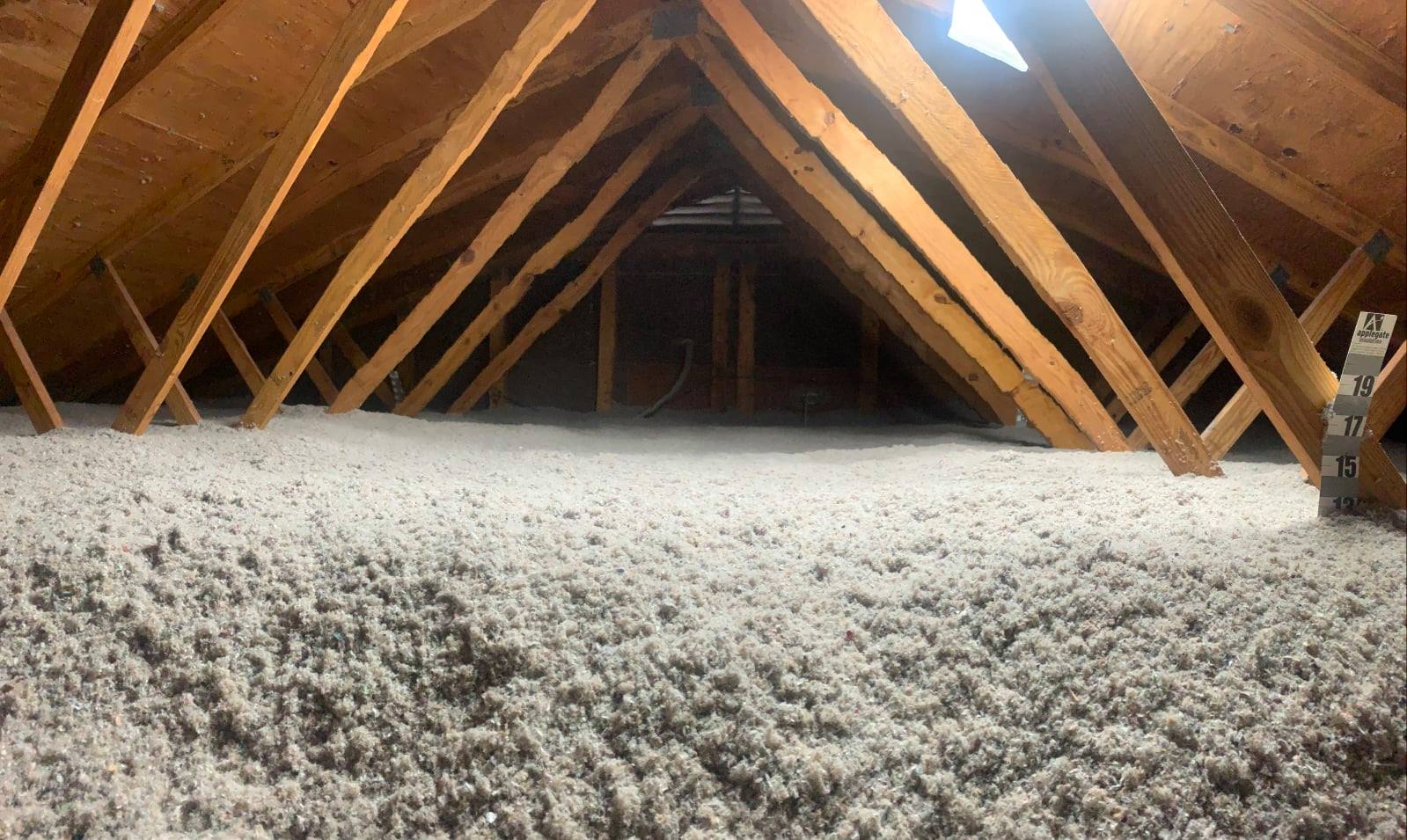
How Does Blown-In Insulation Work?
Blown-in insulation is installed using a specialized blowing machine that breaks apart compressed packages of insulation material and pneumatically pushes it through a long flexible hose into the attic. The installer directs the hose to distribute material evenly across the entire attic floor:
Material Loading
Compressed bags of insulation are fed into the blowing machine at ground level. The machine breaks apart the compressed material into individual fibers or particles.
Pneumatic Distribution
The machine pushes the loosened material through a long hose up into the attic. Air pressure carries the insulation where the installer directs it.
Even Coverage
The installer systematically covers the entire attic floor, starting from the far corners and working back toward the access point. Material fills around pipes, ducts, wiring, and every gap.
Depth Verification
Depth markers (rulers) are placed throughout the attic before installation. The installer verifies uniform depth at every marker to confirm target R-value is achieved everywhere.
Blown-In Fiberglass vs. Blown-In Cellulose: Which Is Better for Los Angeles?
The two main blown-in insulation materials are fiberglass and cellulose. Here is a detailed comparison:
| Feature | Blown-In Fiberglass | Blown-In Cellulose |
|---|---|---|
| Material | Spun glass fibers (40–60% recycled glass) | Recycled newspaper treated with fire retardant (85% recycled content) |
| R-Value per Inch | R-2.2 to R-2.7 | R-3.2 to R-3.8 |
| Depth for R-38 | ~17 inches | ~10–12 inches |
| Cost per Sq Ft | $1.50–$4.00 | $1.25–$3.50 |
| Fire Resistance | Non-combustible (Class A) | Treated with fire retardant (Class A when treated) |
| Moisture Resistance | Does not absorb moisture | Absorbs moisture (can promote mold if wet) |
| Settling | 5–10% over time | 15–20% over time |
| Weight | Lighter (0.5–1 lb/cu ft) | Heavier (1.5–2.5 lb/cu ft) |
| Sound Absorption | Good | Excellent (denser material) |
| Warranty | Owens Corning limited lifetime | Varies by manufacturer |
| Our Recommendation | ⭐ Preferred for LA (fire-safe, dry, long-lasting) | Good budget option where fire risk is lower |
Our recommendation: For Los Angeles attics, we strongly recommend blown-in fiberglass over cellulose. The non-combustible fire rating is critical in wildfire-prone LA, the moisture resistance prevents mold problems, and the lower settling rate means your R-value lasts longer. The slightly higher cost per square foot is offset by the longer lifespan and better warranty.
Why Is Blown-In Insulation Better Than Batts for Most Existing Attics?
While fiberglass batts work well in new construction with open, accessible framing, blown-in insulation is almost always the better choice for existing attics. Here is why:
Complete Gap Coverage
Batts are cut to standard widths (15" or 23") and often leave gaps at edges, around obstacles, and at irregular framing. Blown-in material flows into every crack, crevice, and void for truly complete coverage. Even small gaps in batt coverage can reduce overall R-value by 25% or more.
Covers Over Joists
Batts sit between joists, leaving the joist tops exposed as thermal bridges. Blown-in insulation covers OVER the joists, eliminating thermal bridging and creating a continuous insulation blanket. This alone can improve effective R-value by 10–15% compared to batts of the same rated R-value.
Works Around Obstacles
Every attic has plumbing vents, electrical wiring, junction boxes, HVAC ducts, and other obstacles that make batt installation difficult. Blown-in insulation flows around all of these obstacles without cutting, fitting, or leaving gaps.
Faster Installation
A professional crew can blow in R-38 insulation across a 1,500 sq ft attic in 2–3 hours. Installing batts in the same space takes 6–8 hours or more due to cutting, fitting, and working around obstacles. Faster installation means lower labor costs and less disruption.
Custom R-Values
Batts come in fixed R-value sizes (R-11, R-19, R-30, R-38). Blown-in can be installed to ANY R-value simply by adjusting the depth. Want R-42? No problem. R-49? Just blow more material. This flexibility is invaluable for hitting specific Title 24 targets.
Easy to Add Over Existing
Adding blown-in insulation over existing insulation is simple—just blow new material on top of the old material. Adding batts over existing batts is awkward and often results in compressed layers that reduce R-value. Blown-in over existing blown-in integrates seamlessly.
How Much Does Blown-In Attic Insulation Cost in Los Angeles?
Here is a detailed cost breakdown for blown-in insulation projects in Los Angeles:
| Project Type | Cost / Sq Ft | 1,500 Sq Ft Attic | Includes |
|---|---|---|---|
| New Install to R-38 | $1.50–$4.00 | $2,250–$6,000 | Air sealing, blown-in fiberglass, depth markers, R-value certificate |
| Top-Off (R-19 to R-38) | $1.00–$2.50 | $1,500–$3,750 | Additional blown-in over existing clean insulation |
| New Install to R-49 | $2.00–$4.50 | $3,000–$6,750 | Enhanced depth, air sealing, depth markers, R-value certificate |
| Complete Remove & Replace | $3.00–$6.00 | $4,500–$9,000 | Old insulation removal, Microban sanitization, air sealing, new blown-in to R-38 |
| Add Radiant Barrier | +$0.75–$1.50 | +$1,125–$2,250 | Radiant barrier on underside of roof deck (recommended add-on) |
*All prices are installed costs including labor, material, equipment, and cleanup. We offer wholesale pricing that is typically 15–20% below retail contractor rates. Call (818) 937-4500 for a free estimate.
Our Blown-In Insulation Installation Process
Every blown-in insulation project follows our six-step process for guaranteed R-value performance:
Free Attic Inspection
Measure existing insulation, check for contamination, assess attic access, ventilation, and structural condition. Provide written findings and recommendations.
Seal Attic Penetrations
Seal all openings in the attic floor: plumbing vents, electrical boxes, wire penetrations, HVAC chases, recessed lights, and gaps around framing. Critical for insulation performance.
Install Depth Markers
Place R-value depth markers at regular intervals across the attic. These rulers allow us (and you) to verify insulation depth and R-value at any time.
Install Baffles at Eaves
Cardboard or foam baffles installed at every eave bay to maintain attic ventilation airflow from soffit vents to ridge or roof vents. Insulation must not block ventilation paths.
Blow Insulation to Depth
Using professional blowing equipment, we distribute insulation evenly across the entire attic to the target depth. We start from the farthest point and work back, verifying depth at every marker.
Final Verification
Check depth at all markers, photograph completed installation, clean up any stray material, and provide your R-value certificate with insulation type, depth, and manufacturer warranty information.
How Do You Maintain Blown-In Insulation and Handle Settling Over Time?
Blown-in insulation is low-maintenance, but it does require periodic attention to maintain peak R-value performance. Here is what every Los Angeles homeowner should know about long-term maintenance:
Inspect Every 10–15 Years
Check insulation depth against the installed depth markers. If the depth has dropped more than 15% from original installation, consider a top-off to restore full R-value. We offer free inspections for past customers.
Check After Roof Work
Any time someone works in your attic—roofers, electricians, HVAC technicians, cable installers—they may disturb the insulation. Check for bare spots, compressed areas, and displaced material after any attic work and redistribute or add material as needed.
Watch for Rodent Activity
Rodents love attic insulation for nesting. If you hear scratching in the attic, see droppings, or notice musty odors, have the attic inspected immediately. Rodent-contaminated insulation must be removed and replaced for health reasons.
Monitor Moisture
If you notice water stains on your ceiling, musty smells, or visible moisture in the attic, address the source immediately. Wet blown-in insulation (especially cellulose) loses R-value rapidly and can promote mold growth. Fix the leak first, then assess the insulation damage.
Do Not Walk On It
Walking on blown-in insulation compresses it and reduces R-value. If you need to access equipment in the attic, walk on the joists or install walkboards above the insulation. Never store items on top of blown-in insulation.
Top-Off When Needed
Adding new blown-in insulation over settled material is simple, fast, and affordable. A top-off from R-30 to R-38 costs approximately $1.00–$2.50 per sq ft and restores full thermal performance. No removal of existing material needed if it is clean and dry.
Explore More Insulation Options
Get a Free Blown-In Insulation Estimate
Professional blown-in insulation installation at wholesale pricing.
Call today for a free attic inspection and insulation quote. We will tell you exactly what R-value you have and what you need.
Frequently Asked Questions About Blown-In Attic Insulation
Frequently Asked Questions
Blown-in insulation (also called loose-fill insulation) consists of small particles of fiberglass, cellulose, or mineral wool that are pneumatically blown into attic spaces using professional equipment. The particles fill gaps, cover obstacles, and create a continuous blanket of insulation across the entire attic floor. It is the most popular method for insulating existing attics because it provides superior coverage compared to batt insulation.